
Best Ways to Protect Funds in Trading Accounts
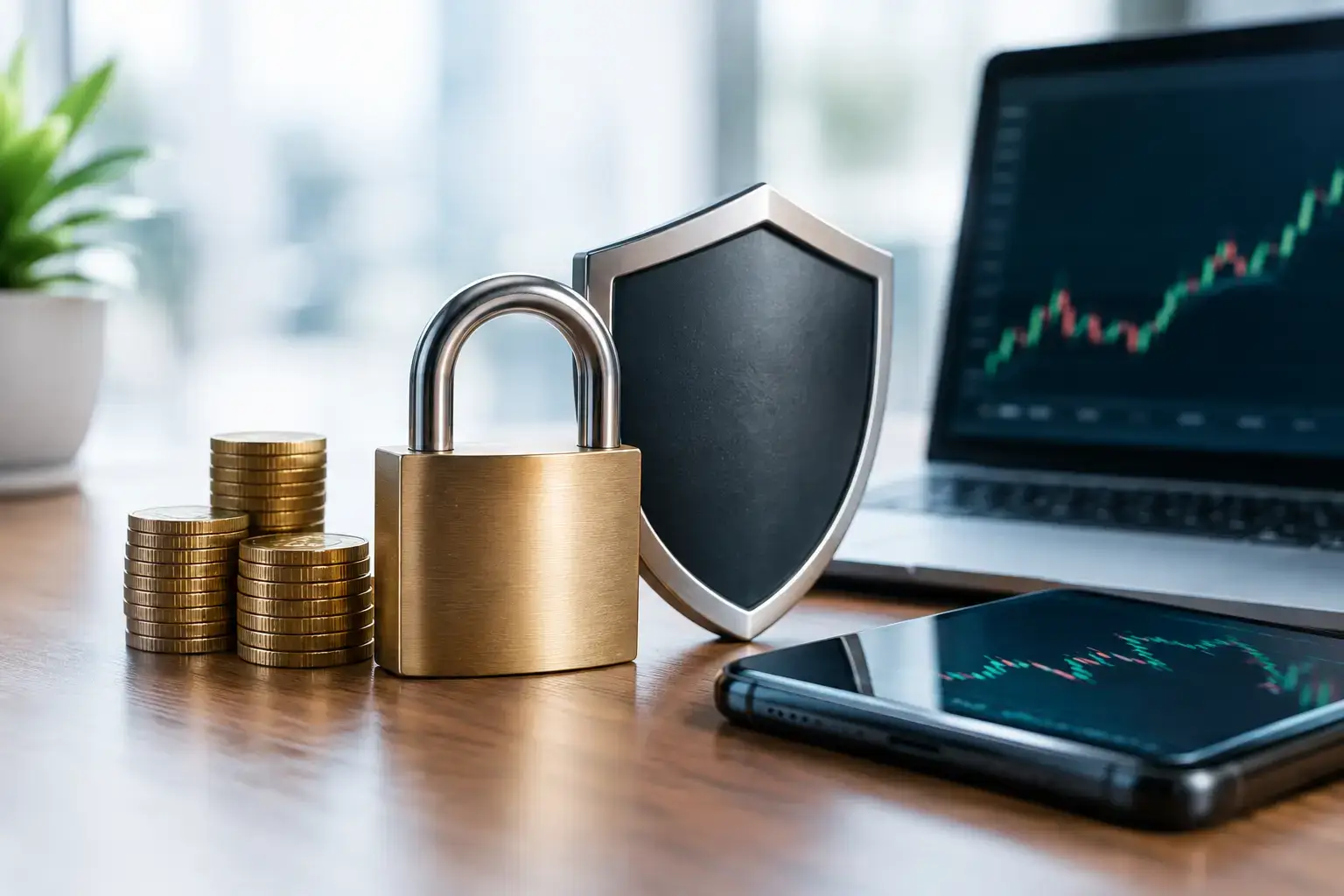
A trading balance is working capital, not a number to leave unattended. The best ways to protect funds combine broker-level safeguards, account-security habits, and disciplined exposure control. Each layer addresses a different risk: custody risk, unauthorized access, transfer errors, and trading losses. Neglect one, and the others may not be enough.
For CFD traders, protection begins before the first order is placed. Fast execution, broad market access, and leverage can support a well-defined strategy, but they also demand tighter control over how much capital is at risk on every position.
Separate fund safety from trading risk
The phrase “protecting funds” can mean two very different things. One is protecting money held in a trading account from operational or security failures. The other is protecting account equity from adverse market movement. A serious trading process accounts for both.
Operational safeguards help determine how client money is held, how deposits and withdrawals are processed, and who can access the account. Trading safeguards determine whether a single volatile session, oversized position, or gap through a stop can cause unacceptable damage.
Neither category replaces the other. Segregated client funds, for example, are a custody measure. They do not prevent a leveraged trade from losing value. A stop-loss order can limit market exposure under normal conditions, but it does not secure an account compromised by a weak password. Treat protection as a system rather than a single feature.
Choose a broker with clear client-money safeguards
Start with the operating conditions behind the trading platform. A broker should explain how client funds are handled, what protections apply to account balances, and how users can access support if an issue requires review. Vague claims are not a substitute for documented terms and clear procedures.
Segregated client funds are a core consideration. This practice separates client money from the broker’s operating funds, creating a clearer boundary between client balances and day-to-day business expenses. It is an operational safeguard, not a guarantee against every outcome, but it is a meaningful standard for traders assessing where to deposit capital.
Negative balance protection is another relevant control for retail traders using leverage. In extreme market conditions, losses can accelerate quickly. A negative balance protection policy is designed to cap a client’s liability at the funds available in the account, subject to the broker’s applicable terms. It should never be treated as a reason to use excessive leverage. Its purpose is downside containment when markets move beyond expectations.
Execution quality also matters. Market execution, transparent trade conditions, and no-requote practices can help traders understand how orders are handled when prices move. They do not eliminate slippage, particularly during major data releases or thin liquidity, but clear execution rules make risk easier to evaluate before entering a position.
At Olla Trade, traders can review account conditions and platform access before funding, then use MT4 to manage positions across supported markets. The practical point is simple: understand the safeguards and the execution model before capital is exposed.
Secure the account before funding it
Most account-security failures do not start with advanced technical attacks. They start with reused passwords, exposed email access, or rushed decisions made from an unfamiliar device. The trading account and the email address connected to it should be protected to the same standard, because email is often the route used for password resets and withdrawal notifications.
Use a unique, long password stored in a reputable password manager. Do not reuse credentials from social media, shopping, or older financial accounts. Where available, enable multi-factor authentication and keep recovery methods current. If a platform offers login alerts or withdrawal confirmations, use them.
Avoid signing in through public Wi-Fi unless you have a trusted, secured connection. Shared computers and browser sessions create unnecessary exposure, especially if account credentials, documents, or funding details are saved locally. Keep your operating system, browser, mobile device, and security software updated. These are basic controls, but they prevent a large share of avoidable account-access issues.
A useful security routine includes four checks:
- Review login activity and account notifications regularly.
- Confirm that the registered email address and phone number remain under your control.
- Log out of unused devices and do not share platform credentials.
- Treat unsolicited messages about deposits, withdrawals, or account verification as suspicious until verified through the official client portal.
Support teams can assist with legitimate account questions, but no serious provider should ask for a password or request that a trader send funds to an unverified personal address.
Protect deposits and withdrawals from avoidable errors
Funding security is not only about fraud. Simple operational mistakes can be expensive, especially when transferring cryptocurrency or sending bank payments across borders. Verify every detail before confirming a transaction.
For crypto transfers, confirm the asset, network, and destination address. A mismatch between the selected network and the receiving address can lead to delayed or unrecoverable funds. Do not rely on a copied address from an old message, screenshot, or chat window. Retrieve the current funding instructions from the secure client area each time, compare the first and last characters of the address, and use a small test transfer when the amount or process is unfamiliar.
For bank transfers, use account details displayed in the authorized portal and retain the transaction reference until the deposit is credited. For e-wallets, ensure the wallet is registered in your name where required and that the account is protected with its own strong credentials and authentication settings.
Withdrawal discipline matters just as much. Keep personal and payment information accurate, complete verification requirements promptly, and review withdrawal instructions before submission. If bank details or a crypto wallet address suddenly change, pause and verify the request through the official channel. Urgency is often the enemy of accuracy.
Use leverage as exposure, not as permission
Leverage is a capital-efficiency tool. It is not a target position size. The amount of margin required to open a trade can be far smaller than the market exposure created by that trade, which is why an account can appear comfortably funded while carrying more risk than intended.
The strongest protection is to size each position from the stop-loss distance and the amount you are prepared to lose if the trade fails. Decide the risk first, then calculate the volume. Do not set volume based only on available margin or the maximum leverage offered on an instrument.
For example, a tighter stop does not automatically make a trade safer. If the stop is placed inside normal market volatility, it may be triggered frequently. A wider stop may be more logical technically, but it requires a smaller position size to keep the monetary risk unchanged. The correct balance depends on the instrument, time frame, volatility, and strategy.
Be especially careful around major economic releases, central-bank decisions, weekend holds, and market opens. Stops can be filled at a different price than requested when liquidity changes rapidly. This is a normal market risk, not necessarily an execution failure. Reducing exposure ahead of known events can be more effective than assuming an order will always exit at an exact level.
Set hard limits before emotions set them for you
A protective trading plan should define a maximum loss per trade, a maximum loss for the day or week, and a point at which trading stops for review. These limits turn risk management into a process rather than a reaction to a losing streak.
The daily limit is particularly useful for active traders. After several losses, execution quality often declines: entries become rushed, stops widen without a technical reason, and traders attempt to recover losses by increasing volume. A pre-set pause protects capital and decision quality at the same time.
Keep a record of open exposure across correlated positions. Buying multiple currency pairs tied to the same currency, or holding positions across indices and stocks influenced by the same risk event, can create concentrated exposure even when each trade looks modest on its own. Diversification is not measured by the number of tickets in the terminal. It is measured by whether the positions would likely lose together.
Keep only strategy capital in the account
Not every dollar of available cash needs to remain in a trading account. Traders should distinguish between capital allocated to a current strategy, funds reserved for future opportunities, and money needed for personal obligations. CFD trading involves substantial risk and is not an appropriate place for emergency savings, rent, tax obligations, or money required on a fixed date.
The right account balance depends on trading frequency, instrument volatility, margin requirements, and the strategy’s expected drawdown. An underfunded account may encourage oversizing. An oversized balance may invite unnecessary risk if there are no clear allocation rules. Define the amount required to execute the plan properly, then reassess it as conditions and experience change.
Fund protection is built through repeated, deliberate decisions: select transparent safeguards, secure every access point, verify every transfer, and keep each trade small enough to survive being wrong. Markets cannot be controlled, but exposure can. That is where professional risk management begins.
আর্টিকেলগুলো শুধুমাত্র তথ্যগত ও শিক্ষামূলক উদ্দেশ্যে এবং এগুলো বিনিয়োগ পরামর্শ গঠন করে না। CFD ট্রেডিং উল্লেখযোগ্য ক্ষতির ঝুঁকি বহন করে। অতীতের কর্মক্ষমতা ভবিষ্যৎ ফলাফলের নির্ভরযোগ্য সূচক নয়। Olla Trade Ltd. একটি Anguilla নিবন্ধিত সংস্থা।