
Examples of Market Analysis for Traders and Investors

TL;DR:
- Market analysis combines data and insights to inform trading decisions. It improves success rates and resource efficiency by guiding entry timing and reducing errors.
Market analysis is defined as a structured process that combines quantitative data and qualitative insights to support informed trading and investment decisions. Structured market analysis gives organizations a 67% higher success rate in new markets and 2.2x better resource allocation efficiency. These numbers matter to traders because they translate directly into fewer costly mistakes and sharper entry timing. The practical examples of market analysis covered here span trend analysis, competitive mapping, customer segmentation, pricing evaluation, and AI-powered research, giving you a concrete toolkit you can apply across Forex, CFDs, indices, and other instruments.
1. What are the key examples of market analysis for traders?
Market analysis covers several distinct types, each answering a different question about market conditions. Knowing which type to apply, and when, separates traders who react from those who anticipate.
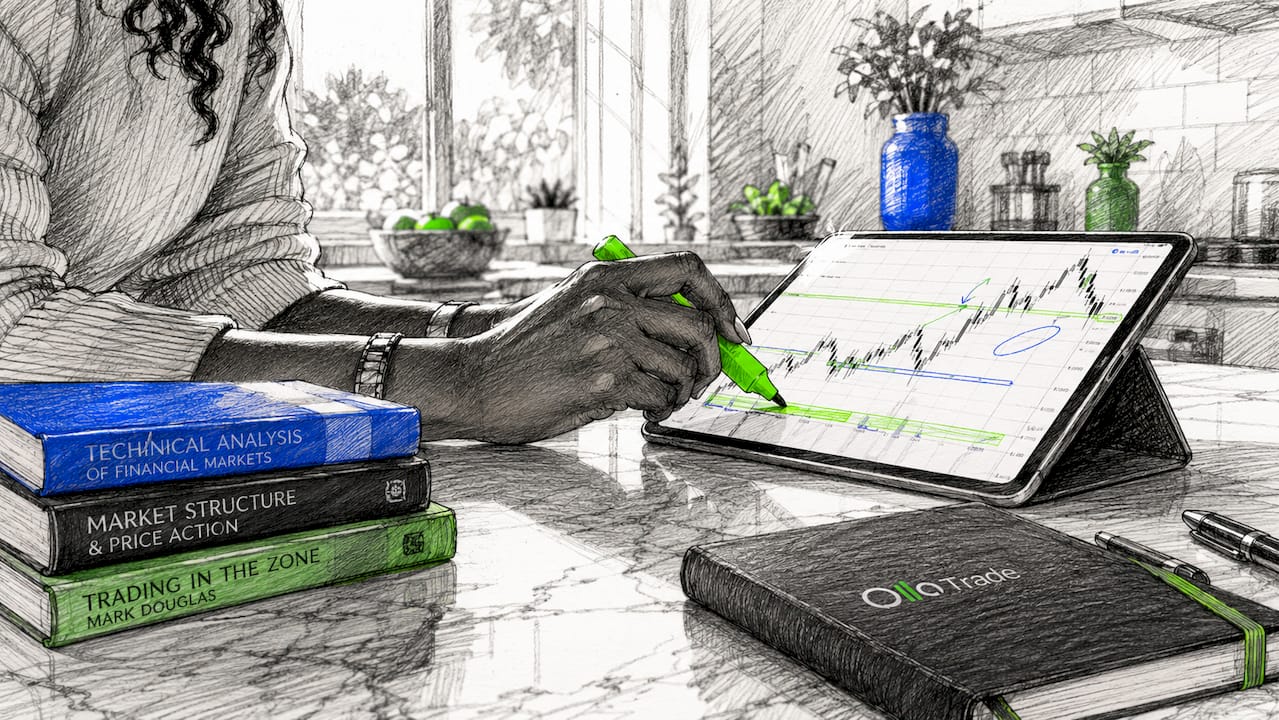
Trend analysis examines price momentum, volume patterns, and macroeconomic drivers to identify the direction of an asset. A Forex trader watching EUR/USD might combine moving averages with GDP release data to confirm whether a trend has real economic backing or is purely speculative. Trend analysis is the most widely used type because it works across all timeframes, from intraday scalping to multi-month position trading.
Competitive analysis maps the relative strength of market participants. In equity markets, this means assessing market share shifts, earnings revisions, and sector rotation. A trader building a position in energy stocks, for example, would analyze how the top producers are positioned against each other before committing capital.
Customer segmentation analysis applies directly to understanding retail trader behavior and institutional flow. Knowing whether a price move is driven by retail momentum or institutional accumulation changes how you manage a trade. Consumer behavior data blended with economic trends verifies whether a thesis has broad market support or is isolated to a single participant group.
Pricing and elasticity analysis evaluates how sensitive an asset’s price is to external shocks. Crude oil, for instance, shows high elasticity to supply disruptions. A trader who models this relationship can size positions more accurately during geopolitical events.
Value chain and structural analysis examines supply and demand at a systemic level. For commodity traders, understanding the full production chain, from raw extraction to end consumer, reveals where bottlenecks form and where price pressure is most likely to build.
2. How does technology enhance market analysis in 2026?
Technology has fundamentally changed the speed and cost of conducting market research. The gap between a trader using manual research and one using automated tools is now measured in days, not hours.
The clearest example comes from the FMCG sector, where AI-powered research cuts costs by 61% and compresses concept testing from 4–6 weeks to 72 hours. That same compression applies to financial market research. A trader who previously spent weeks gathering macro data can now run the same analysis in a single session.
Automated deep research tools take this further. Screening up to 15 metro areas at 99.9% lower cost with a two-week turnaround versus the traditional 6–8 weeks shows what automation delivers at scale. For traders monitoring multiple currency pairs or commodity markets simultaneously, this kind of parallel screening is a direct competitive advantage.
Key technology capabilities that improve market analysis include:
- Real-time brand and market health monitoring that flags sentiment shifts before they appear in price action
- Multilingual, multi-market research stacks that enable cross-market monitoring and reduce costs for traders covering emerging markets
- AI-assisted screening that identifies opportunity gaps across sectors in hours rather than weeks
- Virtual persona modeling that simulates how different investor segments might react to a market event
Pro Tip: Use AI tools for initial screening and pattern detection, but always apply human judgment before executing a trade. Automated tools excel at breadth; experienced traders add depth.
Ollatrade’s research tools for traders integrate real-time data feeds and charting capabilities that support exactly this kind of technology-enabled analysis.
3. What market analysis case studies show real-world results?
Case studies reveal how abstract frameworks produce concrete outcomes. Three examples stand out for traders and investors.
1. IPO market sizing and narrative repositioning
A Gulf retail company preparing for an IPO on Boursa Kuwait used market analysis to reframe its competitive position. Rather than presenting itself as a small regional player, the analysis shifted the investment narrative to position the company as a category leader in a fast-growing, under-mapped convenience retail segment. The result was a fundamentally different investor perception, one that supported a higher valuation. For traders, this case illustrates how narrative analysis can precede and predict price movement around corporate events.
2. Multi-market quantitative and qualitative research for portfolio allocation
An investment firm evaluating a quick commerce deal combined fieldwork, proprietary benchmarks, and competitive landscape mapping to assess market viability. Screening and due diligence were treated as separate steps. Automated screening identified the opportunity; human-led verification confirmed whether the micro-market dynamics supported the investment thesis. This two-stage approach reduced the risk of acting on aggregate data that masked local realities.
3. Real estate market screening across 15 markets
A real estate investor used automated tools to screen 15 metropolitan areas simultaneously, cutting research costs by 99.9% compared to traditional methods. The analysis identified three high-priority markets within two weeks. The investor then applied human oversight for final due diligence on those three markets only, concentrating expert time where it mattered most.
“Market analysis translates raw data into decisions that minimize risk and avoid costly misinvestment.” — LexisNexis Market Analysis Glossary
Each of these cases follows the same structure: broad data collection, structured filtering, and expert synthesis. Traders who apply this sequence to their own research avoid the most common failure mode, which is acting on incomplete information.
4. What are common pitfalls in market analysis and how do you avoid them?
Even experienced traders make predictable mistakes in market analysis. Recognizing these patterns is the first step to avoiding them.
Overreliance on aggregate data is the most common error. Aggregate figures like average daily volume or sector-wide earnings growth can mask sharp divergences at the individual instrument level. A currency pair showing stable average volatility may have extreme intraday swings that aggregate data smooths over entirely.
Failing to combine quantitative and qualitative data produces incomplete analysis. Numbers tell you what happened; qualitative research tells you why. A high-quality market analysis integrates consumer behavior with macroeconomic trends to define a competitive advantage. Traders who skip qualitative inputs miss the narrative layer that often drives price action around earnings, policy decisions, and geopolitical events.
Common pitfalls to watch for:
- Treating automated screening results as final conclusions rather than starting points
- Updating analysis only at fixed intervals instead of monitoring continuously
- Ignoring micro-market dynamics that contradict the macro trend
- Applying a single analytical framework to all asset classes regardless of their unique drivers
Pro Tip: Build a cumulative knowledge base rather than running isolated studies. Experienced practitioners query past research to accelerate new analysis, compounding their edge over time.
Speed often outweighs perfect precision in market analysis. A good analysis delivered quickly beats a perfect analysis delivered too late to act on. The goal is a repeatable process that balances thoroughness with timeliness. Ollatrade’s advanced charting tools support continuous monitoring so you can update your analysis as conditions change rather than relying on static snapshots.
For traders managing risk across multiple positions, connecting market analysis directly to risk management strategies is the practical bridge between research and execution.
Key Takeaways
The most effective market analysis for traders combines structured quantitative screening, qualitative narrative assessment, and continuous human oversight to convert raw data into executable decisions.
| Point | Details |
|---|---|
| Structured analysis improves outcomes | Organizations using formal market analysis are 67% more likely to succeed in new markets. |
| Technology compresses research cycles | AI tools cut research costs by 61% and reduce concept testing from weeks to 72 hours. |
| Two-stage research reduces risk | Separate automated screening from human-led due diligence to catch micro-market realities. |
| Narrative reframing drives perception | Repositioning a market story from “small player” to “category leader” directly influences investor valuation. |
| Speed beats perfection | A timely, good-enough analysis executed quickly outperforms a delayed perfect one in active markets. |
What I’ve learned from years of watching traders misuse market analysis
Most traders treat market analysis as a one-time task. They run a study before entering a position, then stop. That is the single biggest mistake I see, and it explains why so many well-researched trades still go wrong.
Markets are not static. The analysis that justified your entry last week may be invalidated by a central bank statement or a supply shock this week. The traders I’ve seen perform consistently well treat analysis as a continuous process, not a pre-trade checklist. They build on previous research rather than starting from scratch each time. That compounding effect is where the real edge lives.
I’ve also noticed that traders who integrate AI tools without maintaining human judgment tend to overtrade. Automated screening is excellent at identifying candidates. It is poor at weighing context, reading between the lines of a policy statement, or recognizing when a historical pattern is breaking down. The best results come from using technology for breadth and reserving your own judgment for depth.
The case study examples in this article share one trait: they all separate the screening phase from the synthesis phase. That discipline is harder to maintain than it sounds, especially when a trade looks obvious. Resist the urge to collapse those two steps into one. The firms and traders who get this right consistently outperform those who treat a screening result as a final answer.
— FX
Ollatrade’s tools for market-informed trading
Applying market analysis insights requires a platform built to support real-time decisions across multiple instruments and conditions.
Ollatrade gives traders access to Forex markets, CFDs on metals, indices, stocks, energies, and cryptocurrencies through MetaTrader 4 integration, advanced charting, and expert advisors. The platform’s economic calendar and market news feed support the continuous monitoring that effective analysis demands. Whether you are screening macro trends or drilling into a single currency pair, Ollatrade’s tools are built for traders who take their research seriously. Account creation is straightforward, spreads are tight, and execution is fast, so your analysis translates directly into action without friction.
FAQ
What is market analysis in trading?
Market analysis is the structured process of combining quantitative data and qualitative insights to evaluate market conditions and support trading decisions. It covers trend analysis, competitive mapping, pricing evaluation, and customer behavior assessment.
How do examples of market analysis help traders?
Concrete examples show which analytical frameworks apply to specific market conditions, reducing the learning curve and helping traders build repeatable research processes rather than reacting to price action alone.
What is the role of AI in modern market analysis?
AI tools reduce research costs by 61% and compress analysis timelines from weeks to hours. Human oversight remains necessary for final synthesis and due diligence on micro-market dynamics.
How often should traders update their market analysis?
Continuous monitoring is more effective than fixed-interval updates. Market conditions shift with policy decisions, economic releases, and geopolitical events, all of which can invalidate a static analysis quickly.
What is the difference between screening and due diligence in market analysis?
Screening uses automated tools to identify candidates across multiple markets efficiently. Due diligence is the human-led verification step that confirms whether the opportunity holds up under closer examination of local or instrument-specific factors.
Recommended
Articles are for informational and educational purposes only and do not constitute investment advice. Trading CFDs carries significant risk of loss. Past performance is not a reliable indicator of future results. Olla Trade Ltd. is an Anguilla registered entity.